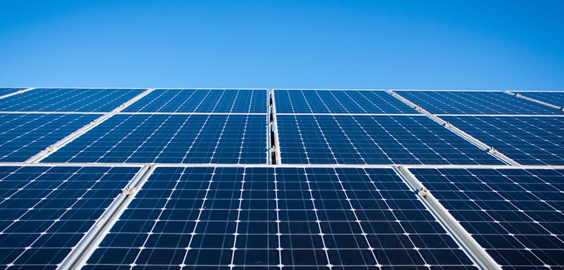
Our cities and towns are growing and becoming more and more sophisticated. Behind this is greater demand for new more efficient technologies for generation and distribution of electricity, new materials with surprising properties and new types of vehicles.
Together with the quest for efficiency comes the demand for resilience and capability of technologies to cope with unexpected events. The wind energy may provide plentiful supply of electricity but the wind does not blow when we need it; so how may we make sure that the electrical power is always there when we need it? When the world will run out of oil, what energy will be driving our cars and what kind of cars will that be?
These are questions our world-class team of Future Engineering researchers are answering. Helping find solutions to make our future cities safer, smarter and greener. Join in the debate.
A multidisciplinary approach to meeting the engineering challenges of our urban environments, concentrating on three main intertwining themes of energy, transport and smart materials, with cross-cutting activities in photonics communications and control, all of which are strongly represented in Northumbria.
Across the world, the percentage of the population living in urban centres is growing, bringing the challenge of a prosperous and equitable lifestyle for all within an environment that is constrained by reducing resources of materials, space and time. Our research concentrates on increasing efficiency, in all its aspects, in order to meet this challenge.
How can engineers make the physical aspects of cities more efficient so that they can cope with more people yet fewer resources?
In 10 years’ time, 60% of the global population will live in urban areas. At Northumbria we are taking a multidisciplinary approach to develop engineering know-how that will be ‘fit for purpose’.
We already have an international reputation in the areas of intelligent transport systems, smart materials and surfaces, photonic communications and renewable energy and power. We also have one of the world’s leading research groups on visible light communications and free space optics. Our whole systems approach means that the best innovations in each area can be combined into novel and exciting ways to deliver the engineering of the future.
OUR VIEW
What technology will be heating your home or driving your car in 20 years?
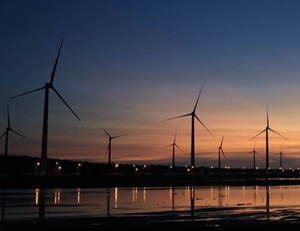 While we don’t have all the pieces of the puzzle yet on how we will travel, work and live in the next 20 years, we are nurturing new ways of thinking through our cutting-edge research at Northumbria University.
We know that by 2037, we could see wind farm technology generating enough electricity to satisfy the needs of 750,000 homes, micro-algae powering public transport, innovative solar roof systems and may be able to wirelessly recharge our electric cars as they drive.
Science and technology are the future, but such alternative energy throws up challenges. Cost, economic factors and the environment are always high on the agenda.
While wind power is never going to run out, there are pros and cons. The next generation of nuclear power stations also face enormous challenges. That’s where our research team’s expertise comes in. We are problem-solvers with a determination to enhance the future of engineering.
Our researchers are currently heading up a €4M project to develop a revolutionary new heating and power system using solar energy – Innova MicroSolar – a four-year Horizon 2020 funded collaborative research project.
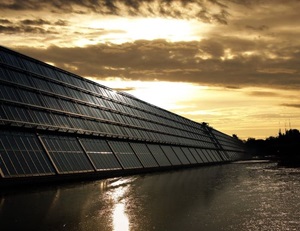 It aims to develop a high performance, yet cost effective, solar heat and power system, which could be used in homes and businesses around the world, lowering costs and protecting the environment through reduced greenhouse gas emissions.
There’s also a real lure to look at micro-algae and its ability to produce fuel. Some of these micro-organisms produce oils to store energy which scientists can convert into fuel for cars, trucks, trains and planes. This renewable source of energy is better for the environment than fossil fuels because its carbon neutral, but it’s expensive.
While we don’t know exactly what will be powering our homes and vehicles of the future, we do know it will be far more efficient than what we have today – and we’re at the forefront of this pioneering research.
 What do you think? Share your views using #ChangingChallengingWorld
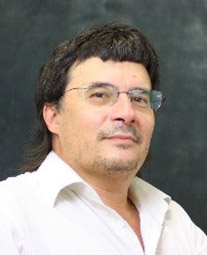
Professor of Future Engineering
Department: Mechanical and Construction Engineering
I am a Professor of Future Engineering within the department of Mechanical and Construction Engineering. I’m a fairly new member of the Northumbria faculty, joining the university in August 2016.
I’ve travelled and worked around the world and I am particularly interested in the fields of turbulence, combustion, internal combustion engines and two-phase flows.
Get in touch: alexey.burluka@northumbria.ac.uk / 0191 227 3754
Intelligent Transport Systems
Professor Ahmed Bouridane
Professor Robert Dominy
Dr Nauman Aslam
Dr Ulubek Azimov
Dr Stuart English
Dr Islam Shyha
Smart Materials & Surfaces
Professor Glen McHale
Dr Rodrigo Ledesma Aguilar
Dr Lynn Dover
Dr Richard Fu
Dr Valery Kozhevnikov
Dr Yifan Li
Dr Gary Wells
Dr Ben Xu
Dr Fawad Inam
Dr Ciro Semprebon
Dr Terence Liu
Renewable Energy and Power
Professor Khamid Mahkamov
Professor Nicola Pearsall
Professor Ghanim Putrus
Professor David Greenwood
Professor Chris Underwood
Dr Vincent Barrioz
Dr Neil Beattie
Dr Ian Forbes
Dr Milutin Jovanovic
Dr Guillaume Zoppi
Photonics Communications, Control and Sensors
Professor Fary Ghassemlooy
Professor Krishna Busawon
Dr Martin Birkett
Dr Xuewu Dai
Dr Zhiwei Gao
Dr Sergio Gonzalez Sanshez
Dr Hoa Le-Minh
Dr Wai Pang Ng
Dr Qiang Wu
YOU MAY ALSO BE INTERESTED IN
Our Facilities

Postgraduate Research Degrees
Would you like to delve deeper into your subject area and shape the future of your field?

Changing Challenging World